Jelia Elbern: A Script Font for Real Projects
As a designer who has worked with countless fonts across various industries, I’ve come to appreciate the importance of a typeface that not only looks good but also functions well in real-world applications. Jelia Elbern, part of the Script Amp collection, is one such font that deserves careful consideration. Its elegant curves and expressive character set make it ideal for branding, editorial design, and digital products, but it’s not without its limitations.
The First Impression: Grace and Elegance
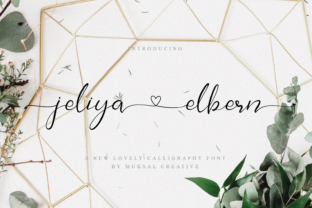
Upon first glance, Jelia Elbern exudes a sense of sophistication. The flowing strokes and delicate details suggest a refined aesthetic, making it perfect for projects that aim to convey luxury, creativity, or personal expression. It feels like a handwritten script but with the consistency and polish of a well-crafted typeface.
The font’s personality is warm and inviting, which makes it suitable for brands targeting a more intimate or artistic audience. However, its fluidity can sometimes feel too ornate for certain contexts, especially when used in large blocks of text.
Real-World Performance: Where It Shines
Jelia Elbern excels as a display font, particularly in logo design and brand identity work. Its unique character set allows for creative and memorable typography, especially when paired with a complementary serif or sans serif font. In packaging design, it adds a touch of personality that can elevate product presentation, especially for niche or artisanal brands.
For website headers and blog graphics, Jelia Elbern can be a powerful tool for drawing attention and setting a visual tone. It works best in short phrases or headlines where its decorative nature enhances rather than hinders readability.
In social media graphics and digital ads, it can add a humanized touch, making content feel more approachable. However, it’s important to test it at different sizes and on various platforms to ensure it maintains clarity and impact.
Where to Use It Carefully
While Jelia Elbern is visually appealing, it’s not always the best choice for large headlines or supporting text. Its intricate details can become difficult to read when scaled down, especially in small print or on mobile screens. This makes it less suitable for body text in editorial design or long-form content.
It also requires careful pairing with other fonts. Using it alongside a heavy serif or bold sans serif can create a balanced contrast, but it may clash with more minimal or geometric typefaces. Designers should experiment with different combinations to find what works best for their project.
For premium packaging or high-end branding, Jelia Elbern can add a distinctive flair, but it’s important to consider how it translates in print. Ink bleed, paper texture, and color can all affect how the font appears, so testing on physical samples is crucial.
Readability and Brand Consistency
One of the key considerations when using any font is its readability. Jelia Elbern performs well in short, focused text, but it can lose legibility in longer passages. This limits its use in areas like product labels or instructional materials, where clarity is essential.
From a brand consistency perspective, Jelia Elbern can help establish a unique visual identity, especially when used in logos, stationery, or marketing collateral. However, overuse can dilute its impact. Designers should use it strategically to maintain a cohesive look across all brand assets.
Audience trust and professionalism are also influenced by typography. While Jelia Elbern can add a creative edge, it may not be the best choice for corporate or formal branding. It’s more suited to industries that value artistry, such as fashion, beauty, or lifestyle sectors.
Practical Designer Notes
Before finalizing Jelia Elbern for a project, I recommend testing it in black and white to see how it holds up without color. This can reveal issues with contrast and legibility that might not be obvious in color.
Check small-size readability by using it in footnotes, captions, or tags. If it becomes too cluttered or hard to read, consider alternative options for those specific applications.
Try it on real mockups—whether digital or printed—to get a better sense of how it interacts with other design elements. Compare uppercase and lowercase forms to ensure they complement each other and maintain visual harmony.
Review spacing carefully. Script fonts often require adjustments to letter spacing and tracking to avoid overcrowding or excessive gaps. Test it beside other font styles, including serif, sans serif, and display fonts, to see how it fits into your overall design system.
Finally, confirm commercial licensing before using Jelia Elbern in client projects or business assets. A premium font like this should come with clear usage rights to avoid legal issues down the line.
Conclusion: A Creative Choice for the Right Context
Jelia Elbern is a versatile script font that brings a unique energy to design projects. It’s ideal for creative fonts, digital products, and printable design elements where visual appeal is a priority. However, its suitability depends on the context and the designer’s ability to balance aesthetics with functionality.
For designers looking to add a personal touch to their work, Jelia Elbern offers a compelling option. Just remember to use it thoughtfully, test it thoroughly, and pair it wisely. When done right, it can enhance a brand’s identity and engage audiences in a meaningful way.