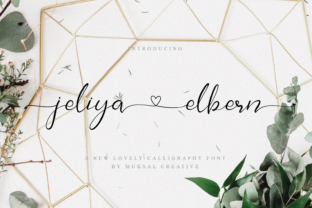
Latisha: A Script Font for Creative Projects
There I was, staring at a blank brand board, trying to figure out how to make the logo stand out. The client wanted something elegant but approachable, something that felt personal yet professional. That’s when I reached for Latisha, a script font that had been sitting in my library for a while, waiting for the right project.
Latisha is inspired by classic typography, but it has its own distinct personality. It’s not too ornate, not too casual—it strikes a perfect balance between sophistication and warmth. The curves are fluid, the strokes are consistent, and there’s a subtle handcrafted feel that makes it feel like it was written with care. It’s the kind of font that can make a headline feel more inviting, or a tagline feel more authentic.
The First Mockup
I started by testing Latisha on a simple logo draft. I paired it with a clean sans serif for contrast, and it worked surprisingly well. The script added a touch of character without overwhelming the design. It was clear, readable, and had just enough flair to catch the eye. I played with different sizes and spacing, and it held up beautifully at both large and small scales.
Next, I tried it on a packaging mockup. The client was thinking about a product label for a new line of handmade soaps. Latisha looked great on the front, giving the product a sense of craftsmanship and care. It wasn’t too flashy, which was exactly what we needed. It made the brand feel more human, more relatable.
Working with Latisha in Branding
As the project evolved, I found myself using Latisha in multiple places. On the website header, it added a soft yet confident presence. In social media graphics, it helped create a cohesive visual language across platforms. Even on business cards, it felt right—clean, professional, and memorable.
One thing I noticed was how Latisha responded to different design contexts. When paired with a serif font, it brought a sense of refinement. When used alone, it felt bold and expressive. It wasn’t just a font; it was a tool that could adapt to different needs while maintaining its unique identity.
Readability was never an issue, even in longer blocks of text. The font’s structure allowed for good legibility, especially when used sparingly. It wasn’t meant for body copy, but as a headline or accent font, it shone. It helped establish visual hierarchy, drawing attention where it was needed most.
Real-World Design Observations
I tested Latisha on a shop sign, and it looked great in both digital and printed formats. The details were sharp, the strokes were consistent, and it maintained its charm whether it was big or small. On a label sticker, it gave the product a polished look without being too formal.
On a homepage hero section, it added a sense of movement and energy. It wasn’t rigid or static—it felt alive, like it was part of the story being told. In an Instagram post, it helped create a visual rhythm that tied the whole campaign together.
Practical Advice for Testing Latisha
If you’re considering using Latisha in your next project, I recommend testing it early and often. Try it on different surfaces, in different sizes, and with different color schemes. See how it interacts with other elements of your design. Does it complement your brand’s voice? Does it help communicate your message?
Also, check the font’s features. Does it include alternates, ligatures, or different weights? These can be useful for creating variations and keeping your design fresh. Make sure it supports the languages you need, and verify the licensing terms if you’re planning to use it commercially.
Font Pairing Tips
When pairing Latisha with other fonts, think about contrast. A clean sans serif can balance its elegance, while a bold serif can add depth and richness. If you’re going for a modern look, pairing it with a geometric sans serif might work well. For a more traditional feel, a classic serif could be the perfect match.
Handwritten fonts can also be a good companion, especially if you want to emphasize a personal or artisanal aspect. Just be careful not to overdo it—too many scripts can make a design feel cluttered.
Using Latisha in Different Projects
Whether you’re working on a café branding, a skincare line, or a creative studio, Latisha can be a valuable addition to your design toolkit. It’s versatile enough to work in logos, packaging, social media, and web design. It adds a touch of personality that can help your brand stand out in a crowded market.
For commercial design assets, like merchandise or marketing materials, Latisha can help create a consistent and recognizable visual identity. It’s a premium font that doesn’t require a lot of effort to use effectively. It’s one of those fonts that just works, no matter the context.
As I wrapped up the project, I realized how much I had come to rely on Latisha. It wasn’t just a font—it was a part of the design process, helping shape the brand’s voice and visual language. It’s the kind of font that makes a designer’s job easier, while still allowing for creativity and expression.